
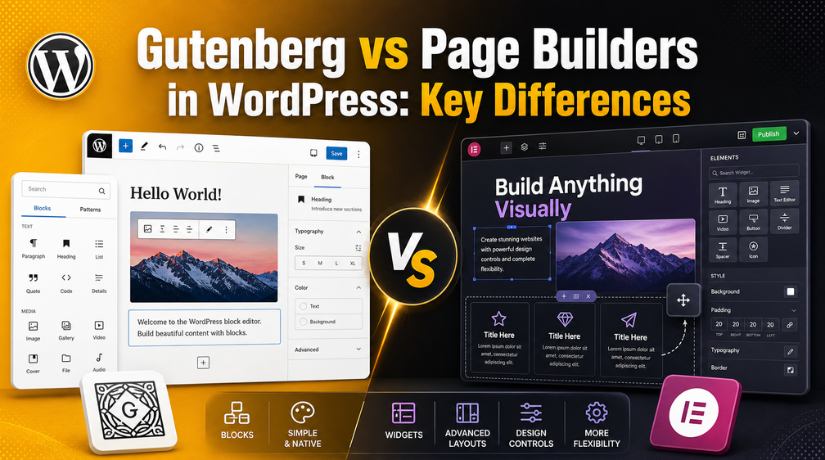
Gutenberg vs Page Builders in WordPress: Key Differences
Introduction
Choosing the right WordPress editing tool can feel confusing. Many users hear about Gutenberg and page builders together. However, both tools work in different ways.
The topic of Gutenberg vs page builders in WordPress matters for every website owner. Your choice can affect design, speed, editing, and future updates. Gutenberg is the default WordPress editor. Page builders are extra tools that add more visual design control.
This guide explains the key differences in a simple way. It will help you understand which option fits your website better. You will also learn how both tools support different website needs.
What Is Gutenberg in WordPress?
Gutenberg is the default editor inside WordPress. It is also called the WordPress block editor. It helps users create content using small content blocks.
Each block controls one part of your page. You can add text, images, buttons, videos, lists, columns, and headings. This makes content creation simple and more organized.
Gutenberg works without adding a separate builder plugin. This makes it useful for users who want a clean setup. It also supports faster editing for regular posts and pages.
Gutenberg is a good choice for:
- Blog posts
- Simple service pages
- Basic landing pages
- Business website content
- Fast-loading layouts
When comparing WordPress block editor vs page builder, Gutenberg feels lighter and more native. It is built directly into WordPress core. This helps users manage content with fewer extra tools.
Modern Gutenberg also includes patterns and reusable blocks. These features help users build layouts faster. It works best when paired with a good block-based theme.
What Are Page Builders in WordPress?
Page builders are visual design tools for WordPress websites. They help users create custom pages without writing code. Most page builders work through drag-and-drop editing. This means you can move sections, columns, and widgets easily.
Popular page builders include Elementor, Divi, Beaver Builder, WPBakery, and Bricks. These tools give users more control over page design. You can adjust spacing, colors, fonts, buttons, images, and layouts.
The comparison of Gutenberg editor vs page builder starts with design control. Gutenberg focuses more on content blocks. Page builders focus more on complete visual page design.
Page builders are useful for websites that need advanced layouts. They help create pages that look polished and professional.
They are commonly used for:
- Custom homepages
- Service landing pages
- Portfolio pages
- Sales pages
- Agency websites
- Marketing campaign pages
Page builders also provide ready-made templates. These templates help users build pages faster. Many builders include widgets for forms, sliders, testimonials, pricing tables, and popups.
However, page builders usually work as separate plugins. They may add extra scripts, styles, and layout code. So, users should use only needed features.
Key Difference Between Gutenberg and Page Builders
The main difference between Gutenberg and page builders is their purpose. Gutenberg is a native content editor inside WordPress. Page builders are design tools for advanced visual layouts.
Gutenberg helps users create clean and structured content. It works well for posts, simple pages, and basic layouts. It keeps the editing process close to WordPress core.
Page builders offer more creative freedom. They allow users to design custom sections with more control. Users can create advanced layouts without touching code.
Here is the simple difference:
Gutenberg is built into WordPress
It works without an extra builder plugin. This keeps the website setup cleaner and lighter.
Page builders are plugin-based tools
They add more design features and visual controls. These features help create complex page layouts.
Gutenberg is better for content-focused websites
It is ideal for blogs, guides, and simple service pages.
Page builders are better for design-heavy pages
They are useful for landing pages, homepages, and sales pages.
So, the right choice depends on your website goal. Use Gutenberg for simplicity and clean content. Use a page builder when advanced design matters more.
Ease of Use: Which One Is Simpler?
Ease of use depends on your website goal. Gutenberg is simple for users who mainly write content. It uses blocks for each content element. You can add headings, images, buttons, lists, and columns quickly.
Gutenberg has a clean editing screen. It does not show too many design options at once. This helps beginners focus on writing and content structure. It is also easier for regular blog updates.
For example, Gutenberg works well when you need:
- Blog posts
- Simple service pages
- Basic content updates
- Clean page sections
- Fast content publishing
Page builders feel more visual and flexible. You can drag sections, move widgets, and adjust styles. You can also see many design changes while editing the page.
However, page builders may feel complex for beginners. They include many settings for spacing, colors, layouts, and effects. New users may need extra time to understand everything.
So, which is better Gutenberg or page builder for ease? Gutenberg is simpler for content editing. A page builder is better for visual design control.
Design Control and Layout Flexibility
Design control is one major comparison point. Page builders usually provide more layout freedom than Gutenberg. They allow users to design detailed pages without custom code.
With page builders, you can control many visual areas. You can manage section width, spacing, columns, buttons, backgrounds, and responsive views. This helps create more polished business pages.


Page builders are useful for advanced sections like:
- Hero banners
- Pricing tables
- Testimonials
- Service blocks
- Call-to-action areas
- Custom landing pages
This is where WordPress Gutenberg vs page builder becomes clearer. Gutenberg is good for clean and simple layouts. Page builders are better for custom designs and marketing pages.
Gutenberg also supports layout design through blocks and patterns. Modern block themes make Gutenberg more powerful. Users can create headers, footers, and templates with full-site editing.
Still, Gutenberg depends heavily on the active theme. Some themes offer better block controls than others. It may not always provide pixel-level design control.
Choose Gutenberg for simple, clean, and fast layouts. Choose a page builder when advanced design flexibility matters more.
Performance and Website Speed
Performance is one of the biggest decision points. Many users compare Gutenberg vs page builder performance before choosing an editor. This matters because speed affects users, SEO, and conversions.
Gutenberg is usually lighter than most page builders. It is part of WordPress core. It often loads fewer extra files on the front end. This can help pages load faster, especially on blogs.
Gutenberg also keeps content structure cleaner. It uses blocks without adding too many extra layers. This makes it easier for themes and browsers to process pages.
Page builders can create beautiful designs. However, they may add extra CSS, JavaScript, and layout code. These files can slow a website when used without care.
Speed issues may happen when users add:
- Too many widgets
- Heavy animations
- Large background images
- Multiple sliders
- Extra third-party add-ons
- Unused builder modules
Still, page builders are not always slow. They can perform well with proper setup. Good hosting, caching, image compression, and clean design choices help a lot.
For speed-focused websites, Gutenberg is usually the safer choice. For design-heavy pages, a page builder may still work well. The key is smart optimization.
SEO Impact: Does Gutenberg or Page Builder Matter?
SEO does not depend only on your editor. It depends on the full website quality. Content, speed, mobile design, headings, links, and schema all matter.
Gutenberg can support SEO well because it creates clean content. It also works well with many SEO plugins. Its lighter structure may help performance-focused websites.
Page builders can also support strong SEO results. Many ranking websites use page builders successfully. The problem starts when pages become too heavy or poorly structured.
To keep SEO strong, follow these simple steps:
- Use one clear H1 heading.
- Add helpful H2 and H3 headings.
- Compress images before uploading them.
- Add useful internal links.
- Keep mobile layout clean.
- Avoid too many effects and scripts.
- Add schema where it supports the page.
Both Gutenberg and page builders can be SEO-friendly. The better choice depends on setup quality. A clean, fast, and helpful page performs better in search.
When Should You Use Gutenberg?
Use Gutenberg when your website needs clean and simple content. It works best for blogs, guides, service pages, and basic business pages. It is also helpful when speed matters more than advanced design effects.
Gutenberg is a good choice when you want:
- Fewer extra plugins
- Faster content editing
- Simple page layouts
- Better long-term maintenance
- A native WordPress workflow
It also works well with modern block themes. These themes help you build layouts without heavy builder tools.
When Should You Use a Page Builder?
Use a page builder when your website needs more design control. It is helpful for custom homepages, landing pages, and sales pages. You can create polished layouts without writing code.
A page builder is useful when you need:
- Advanced section designs
- Ready-made templates
- Drag-and-drop editing
- Custom buttons and forms
- Better visual layout control
Page builders are also useful for agencies and marketing websites. However, avoid using too many effects or widgets.
Gutenberg vs Page Builders: Which One Should You Choose?
There is no single best choice for every website. Your decision depends on your goal, budget, design needs, and maintenance plan.
Choose Gutenberg if you want speed, simple editing, and clean content. It is ideal for blogs and basic business websites. It also reduces extra plugin dependency.
Choose a page builder if you need advanced design freedom. It is better for custom landing pages and visual layouts.
Many websites can use both tools wisely. For example, use Gutenberg for blog posts. Use a page builder for homepage or sales pages.
This balanced setup can offer speed and design flexibility together.
Conclusion
Gutenberg and page builders both serve different needs. Gutenberg is lightweight, native, and content-friendly. Page builders offer stronger design freedom and visual control.
Choose the tool based on your website goals. Do not choose only because it is popular. For expert WordPress help, 24x7WPSupport can review your setup and guide you better.
Related posts:

Brian is a WordPress support specialist and content contributor at 24×7 WP Support. He writes practical, easy-to-follow guides on WordPress troubleshooting, WooCommerce issues, plugin and theme errors, website security, migrations, performance optimization, and integrations. With a focus on solving real website problems, Brian helps business owners, bloggers, and online store managers keep their WordPress sites running smoothly.