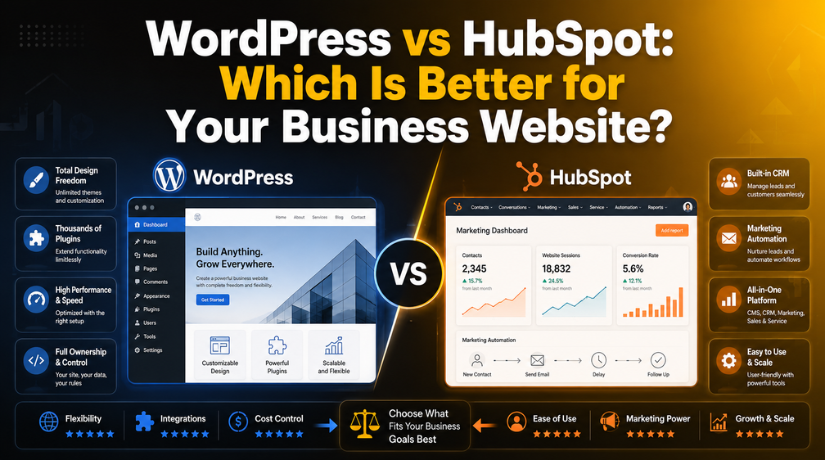
WordPress vs HubSpot: Which Is Better for Your Business Website?
Introduction
Choosing the right CMS is an important business decision. Your CMS controls how your website looks, works, and grows. It also affects SEO, content updates, user experience, speed, and lead generation. Many business owners compare WordPress vs HubSpot before building or improving their website. Both platforms can support a professional business website. However, they serve different needs and goals. WordPress gives more control and freedom. HubSpot offers built-in marketing and CRM tools. So, the better choice depends on your budget, content plan, team skill, and growth goals. For many USA businesses, the best CMS for business website should be flexible, SEO-friendly, easy to manage, and ready for long-term growth.
What Is WordPress and Why Do Businesses Use It?
WordPress is a popular content management system for business websites. It helps users create pages, blogs, service sections, landing pages, and online stores. Many businesses choose WordPress because it gives strong control over design and content. You can use themes, plugins, builders, and custom features. This makes WordPress useful for small businesses and growing brands. It also supports strong SEO work through plugins and technical settings. Business owners can manage content easily with proper training. However, WordPress needs regular updates, backups, security checks, and maintenance. With proper WordPress website support, it can become a strong long-term website platform.
What Is HubSpot CMS and Why Do Businesses Choose It?
HubSpot CMS is a website platform connected with HubSpot’s CRM tools. It helps businesses manage content, contacts, forms, landing pages, and marketing campaigns. Many teams compare HubSpot vs WordPress because HubSpot offers many tools in one place. It can be useful for sales-focused and marketing-focused teams. Users can track leads and manage customer data from one system. HubSpot also gives built-in website tools for content and SEO basics. However, some businesses may find it less flexible than WordPress. When comparing WordPress or HubSpot, businesses should focus on control, cost, SEO needs, and future growth.
WordPress and HubSpot Compared for Website Control
Website control matters when your business starts growing online. A business website needs flexible pages, clear design, and useful features. In the WordPress vs HubSpot comparison, WordPress gives more direct control. You can choose your hosting, theme, plugins, page builder, and custom code. This helps businesses build websites around their exact goals. HubSpot gives a more managed website system. It includes built-in tools for forms, CRM, and marketing. This setup can save time for some teams. However, it may limit deeper changes in design or function. When choosing WordPress or HubSpot, control should be a major factor.
Design Freedom and Custom Feature Options
Design freedom helps your website match your brand properly. WordPress offers thousands of themes and many page builders. You can create service pages, blogs, landing pages, portfolios, and stores. Developers can also build custom layouts and advanced features. This makes WordPress useful for many business types. HubSpot also offers design tools and templates. These tools work well for simple marketing websites. Still, advanced changes may need HubSpot-specific development skills.
WordPress can support many custom needs, such as:
- Service-based business websites
- Local business landing pages
- Blog-focused SEO websites
- WooCommerce online stores
- Custom forms and booking features
- Third-party business integrations
When comparing HubSpot CMS vs WordPress, WordPress gives wider design freedom. HubSpot works better when a business wants simple tools together.
Which Platform Gives Better Long-Term Flexibility?
Long-term flexibility becomes important as business needs change. A website may need new pages, SEO updates, custom forms, or eCommerce features. WordPress can grow with these needs through plugins and custom work. It also gives better ownership over website files and structure. HubSpot can also support growth, especially for marketing teams. But its features depend more on HubSpot plans and tools. For businesses that want open control, WordPress is often stronger. For teams focused on CRM workflows, HubSpot can still be helpful.
WordPress vs HubSpot for SEO Performance
SEO is a key factor in business website growth. Many owners compare WordPress vs HubSpot for SEO before choosing a platform. WordPress gives strong control over SEO settings and site structure. You can optimize titles, meta descriptions, headings, URLs, images, schema, and internal links. SEO plugins also help users manage important optimization tasks easily. This makes WordPress useful for businesses planning long-term search growth.
HubSpot also includes built-in SEO tools. These tools help with basic page suggestions and content checks. They can guide users while creating pages and blog posts. However, WordPress gives more freedom for advanced SEO work. Businesses can choose different plugins, tools, and speed solutions. This gives more control over technical improvements. For many USA businesses, WordPress is often the stronger choice for flexible SEO planning.
Blogging, Content Growth, and Search Visibility
Content plays a major role in website traffic. A business website needs helpful pages and regular blog posts. WordPress started as a blogging platform, so content management is simple. It supports categories, tags, author pages, media, and custom blog layouts. This helps businesses publish useful content around customer questions.
HubSpot also supports blogging and content planning. It works well when teams use HubSpot CRM and marketing tools. Still, WordPress gives more freedom for blog design and SEO structure. If a business wants to build organic traffic, WordPress can help better. It allows deeper control over content format and search visibility. This is why many businesses see WordPress as the best CMS for business website growth.
Technical SEO Control and Optimization Options
Technical SEO helps search engines understand your website better. WordPress gives better access to important technical areas. You can manage XML sitemaps, redirects, canonical tags, schema, robots settings, and caching. You can also improve Core Web Vitals with proper setup. These tasks help improve crawling, indexing, and user experience.
HubSpot handles many technical items inside its platform. This can be helpful for non-technical teams. But advanced changes may be limited by platform settings. WordPress offers more custom control with expert help. With proper WordPress website support, businesses can fix SEO issues faster. They can also improve speed, structure, security, and content performance.


WordPress vs HubSpot Pricing for Business Websites
Pricing is an important point for every business website. Many owners compare WordPress vs HubSpot pricing before making a final choice. WordPress itself is free to use as open-source software. However, businesses still pay for hosting, domain, themes, plugins, security, backups, and support. These costs can change based on website size and needs. A simple business website may cost less with WordPress. A larger website may need premium tools and expert help.
HubSpot uses a platform-based pricing model. It may include CMS tools, CRM features, forms, and marketing options. This can work well for sales and marketing teams. However, advanced features may increase the total cost. So, businesses should compare full yearly costs before choosing.
Which Platform Works Better for Small Businesses?
The comparison of WordPress vs HubSpot for small business depends on goals. Most small businesses need a website that is affordable and flexible. They also need easy content updates, local SEO, contact forms, and service pages. WordPress fits these needs well because it offers strong control. It also allows businesses to start small and grow later.
HubSpot can also help small businesses with lead tracking. It is useful when CRM and marketing tools are needed together. However, some small businesses may not use all those tools at first. Paying for unused features can affect the budget.
Small businesses usually need:
- Clear service pages for customers
- Easy blog publishing for SEO
- Simple contact and quote forms
- Fast-loading pages on mobile
- Local SEO and Google visibility
- Affordable support and maintenance
Budget, Growth, and Support Needs
Budget should not be the only deciding factor. Businesses should also think about long-term website growth. When choosing WordPress or HubSpot, owners should review future needs carefully. WordPress gives more freedom to add new features over time. It also gives better control over hosting and support choices.
HubSpot works better when a company wants built-in marketing tools. WordPress works better when a business wants flexible growth. For many USA small businesses, WordPress offers better value. It supports SEO, content, custom design, and ongoing improvements.
When Should a Business Choose WordPress?
A business should choose WordPress when it needs strong control. It works well for service websites, blogs, landing pages, and stores. WordPress also supports custom designs and advanced SEO changes. This makes it useful for long-term business growth. Businesses that need regular content updates can manage WordPress easily. With proper WordPress website support, owners can handle updates, speed, security, and plugin issues without stress.
WordPress is a better choice when businesses need:
- More design freedom
- Better SEO control
- Flexible plugin options
- Lower starting costs
- Full website ownership
- Custom business features
When Should a Business Choose HubSpot?
HubSpot can be useful for sales and marketing-focused teams. It works well when a business already uses HubSpot CRM. The platform connects website pages, forms, contacts, and campaigns together. This can help teams manage leads from one dashboard. In the HubSpot vs WordPress comparison, HubSpot is easier for built-in marketing. However, it may feel limited for custom website needs.
Conclusion
The WordPress vs HubSpot decision depends on business goals. HubSpot works well for CRM-based marketing teams. WordPress works better for flexible websites and SEO growth. It gives more control over design, content, plugins, and optimization. For many small and growing USA businesses, WordPress is the better long-term choice. It supports content marketing, local SEO, custom features, and website ownership.
Choosing the right CMS is only the first step. Your website also needs updates, security, speed checks, and SEO improvements.24x7wpsupport helps businesses manage and improve WordPress websites. For expert WordPress website support, call 888-818-9916.
Related posts:




Brian is a WordPress support specialist and content contributor at 24×7 WP Support. He writes practical, easy-to-follow guides on WordPress troubleshooting, WooCommerce issues, plugin and theme errors, website security, migrations, performance optimization, and integrations. With a focus on solving real website problems, Brian helps business owners, bloggers, and online store managers keep their WordPress sites running smoothly.