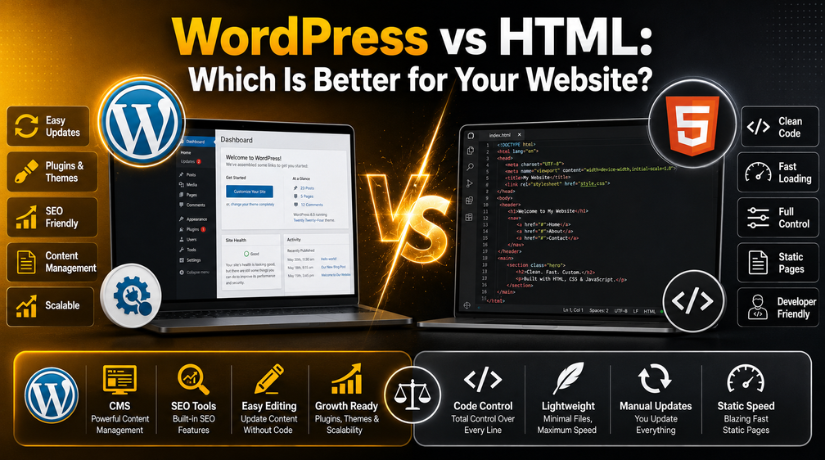
WordPress vs HTML: Which Is Better for Your Website?
Introduction
Choosing the right website platform is an important business decision. Many website owners compare WordPress vs HTML before starting their website. This choice affects design, updates, SEO, cost, and future growth. A good website should not only look professional. It should also help users find information quickly. It should load well, work on mobile, and support business goals.
For many USA businesses, easy website management is very important. Business owners often need to update services, add blogs, change prices, and collect leads. They may not want to contact a developer for every small change. This is where WordPress becomes helpful. It gives users a simple dashboard for regular updates.
HTML websites are different. They are usually managed through code. They can be fast and clean when built properly. However, regular updates may need technical skills. So, the right choice depends on your business needs, budget, SEO plans, and long-term website goals.
What Is WordPress and What Is an HTML Website?
Before choosing a WordPress or HTML website, you should understand both options clearly. Each option has its own purpose. Both can build good websites when used correctly. The main difference is how users manage and update them.
What Is WordPress?
WordPress is a content management system, also called a CMS. It helps users create and manage website content without coding. You can add pages, blog posts, images, menus, and forms from a dashboard. This makes WordPress useful for business owners and non-technical users.
WordPress also supports themes and plugins. Themes control the design and layout of the website. Plugins add extra features like contact forms, SEO tools, security, backups, and speed improvements. This flexibility makes WordPress useful for many website types.
A WordPress website is helpful for:
- Business service websites
- Blogs and content websites
- Local business websites
- Online stores
- Landing pages
- Lead generation websites
WordPress also works well when a website needs regular updates. You can publish new content quickly. You can also improve SEO without editing code every time.
What Is an HTML Website?
HTML is the basic language used to create web pages. It gives structure to headings, text, links, images, and sections. CSS is used with HTML to manage colors, spacing, fonts, and layouts. JavaScript can also be added for interactive features.
An HTML website is often called a static website. This means the content usually stays the same. If you want to change text, images, or layout, you may need code editing. That is why HTML websites often need developer support.
HTML websites can be fast, simple, and stable. They are useful for small websites with limited pages. They are also good for projects needing full custom code control. However, they may not be easy for daily content updates.
Main Difference Between WordPress and HTML Websites
The main difference is how each website is built and managed. A WordPress website vs static HTML website works in a very different way. WordPress gives users a dashboard to manage content. HTML websites usually need direct code changes.
WordPress is useful when website owners need regular updates. You can add new pages, publish blogs, upload images, and edit menus easily. You do not need to touch the main code for every small change. This makes WordPress friendly for business owners, bloggers, and marketing teams.
HTML websites are usually more fixed. They are built with code files. These files include HTML, CSS, and sometimes JavaScript. If you need to change content, a developer may need to edit those files. This gives more code control, but less daily freedom for non-technical users.
WordPress is better for websites that need growth. It works well for service pages, blog posts, landing pages, and lead forms. HTML is better for simple websites with limited updates.
Here is the simple difference:
- WordPress is easier for content updates.
- HTML gives developers more direct code control.
- WordPress supports plugins and themes.
- HTML needs manual coding for extra features.
- WordPress is better for regular blogging.
- HTML is better for simple static pages.
So, the right choice depends on your website use. If you need control from a dashboard, WordPress is helpful. If you need a small coded website, HTML may work well.
WordPress vs HTML for SEO: Which Performs Better?
Many website owners compare HTML vs WordPress for SEO before choosing a platform. The truth is simple. Both WordPress and HTML websites can rank on Google. A platform alone does not guarantee better rankings. SEO depends on content quality, page speed, structure, mobile design, and user experience.
WordPress makes SEO tasks easier for most website owners. You can use SEO plugins to manage meta titles, descriptions, sitemaps, schema, redirects, and internal links. These tools help users follow basic SEO practices without deep coding knowledge. This is very useful for small businesses and service websites.
HTML websites can also perform very well in search results. A clean HTML website can load fast and offer strong code control. However, SEO updates often need manual work. Every page may need separate editing for titles, descriptions, headings, image tags, and structured data.
WordPress is better when you publish content often. It helps you update blogs, add service pages, and improve old content. HTML works better when the content is fixed and rarely changes.
For SEO growth, WordPress is usually easier. For pure code control, HTML is stronger. The best result comes from helpful content, fast pages, and proper technical setup.
Which Is Better for a Business Website?
Choosing the Best platform for business website depends on daily needs. Most business websites need more than basic online pages. They need service pages, contact forms, blog posts, landing pages, and SEO updates. They may also need reviews, tracking tools, and lead forms. WordPress supports these needs in a simple way.
For many USA businesses, WordPress is a practical choice. It allows owners to update content from a dashboard. They can add new services, publish blogs, and edit pages easily. This helps businesses keep their website fresh and useful. Fresh content also supports better user trust and search visibility.


WordPress is also helpful for growing businesses. A company may start with five pages today. Later, it may need location pages, FAQs, forms, or blog posts. WordPress makes these changes easier with themes and plugins. This saves time and reduces developer dependency.
HTML websites can also work well for businesses. They are useful for small websites with fixed content. For example, a simple brochure website may only need a few pages. If the content rarely changes, HTML can be a strong option. It can be fast, clean, and stable when coded well.
However, HTML may not be ideal for regular updates. Every change may need code editing. This can slow down marketing work. It may also increase support costs over time.
WordPress is usually better when a business needs:
- Regular blog updates
- Service page changes
- Contact forms and lead forms
- SEO improvements
- Landing pages
- Easy content control
- Future website growth
HTML is better when a business needs:
- A small static website
- Very limited content changes
- Full custom code control
- Developer-managed updates
- Simple page structure
WordPress vs Custom HTML Website: Cost, Control, and Maintenance
The WordPress vs custom HTML website choice also depends on cost. WordPress can be more affordable for many small businesses. Themes, plugins, and page builders reduce development time. This helps launch websites faster.
A custom HTML website may cost more at the start. Developers usually code layouts, sections, forms, and features manually. This gives full control, but it takes more time. The final cost depends on design needs and features.
Control is also different. WordPress gives business owners dashboard control. They can manage content without coding. Custom HTML gives developers code-level control. This is useful for highly custom projects.
Maintenance is important too. WordPress needs regular updates for core files, themes, and plugins. It also needs security checks and backups. HTML websites need fewer software updates. But content changes often require coding help.
For long-term growth, WordPress is easier for most businesses. For fixed custom projects, HTML can be effective.
WordPress vs HTML5: Is HTML5 a Separate Website Platform?
Many users search for WordPress vs HTML5 when comparing website options. However, HTML5 is not a website platform like WordPress. HTML5 is the latest version of HTML. It helps create the structure of modern web pages. It supports better media, cleaner code, and improved browser support.
WordPress is different because it is a content management system. It helps users create, edit, and manage website content. You can control pages, posts, images, menus, and forms from one dashboard. This makes WordPress easier for business owners and non-technical users.
It is also important to understand one simple point. WordPress websites also use HTML in the background. When a visitor opens a WordPress page, the browser reads HTML, CSS, and JavaScript. So, WordPress does not replace HTML. It makes website management easier over HTML-based coding.
The real comparison is between a WordPress CMS website and a custom HTML or HTML5 website. A WordPress website is better for regular updates and content growth. A custom HTML5 website is better for fixed pages and full code control. Your decision should depend on management, SEO, cost, and future needs.
Which One Should You Choose?
The final choice in WordPress vs HTML depends on your website goals. For most business websites, WordPress is the better option. It gives users more control after the website launch. You can update pages, add blogs, manage forms, and improve SEO easily.
WordPress is a smart choice for growing businesses. It works well for service websites, local business pages, blogs, landing pages, and lead generation websites. It also supports many useful tools through plugins. These tools can help with security, speed, SEO, backups, and forms.
HTML is still a strong choice for some websites. It works well for simple static websites with fixed content. It can also be useful for projects that need full custom coding. A clean HTML website can be fast and stable. However, regular changes may need developer support.
Choose WordPress when you need:
- Easy website updates
- Blog and content growth
- SEO-friendly management
- Lead forms and plugins
- Future website expansion
Choose HTML when you need:
- A small static website
- Few content changes
- Full custom code control
- Developer-managed updates
For most USA businesses, WordPress offers better long-term value. It saves time and gives more content control.
Conclusion
Both WordPress and HTML can create professional websites. The better choice depends on your business needs. WordPress is better for updates, SEO, blogs, and growth. HTML is better for simple and fixed websites. If you need help choosing, fixing, or managing your WordPress website,24×7 WP Support can guide you. You can contact them at 888-818-9916 for helpful website support.
Related posts:
Admin vs Editor vs Moderator: Key Differences Explained

Maximize your business with LearnUpon WooCommerce integration

What Authentication Does WordPress Use? A Complete 2026 Guide

The Intermediate Guide to 301 Redirect WordPress via .htaccess and Plugin

An easy way to integrate Google My Business with WordPress

Brian is a WordPress support specialist and content contributor at 24×7 WP Support. He writes practical, easy-to-follow guides on WordPress troubleshooting, WooCommerce issues, plugin and theme errors, website security, migrations, performance optimization, and integrations. With a focus on solving real website problems, Brian helps business owners, bloggers, and online store managers keep their WordPress sites running smoothly.