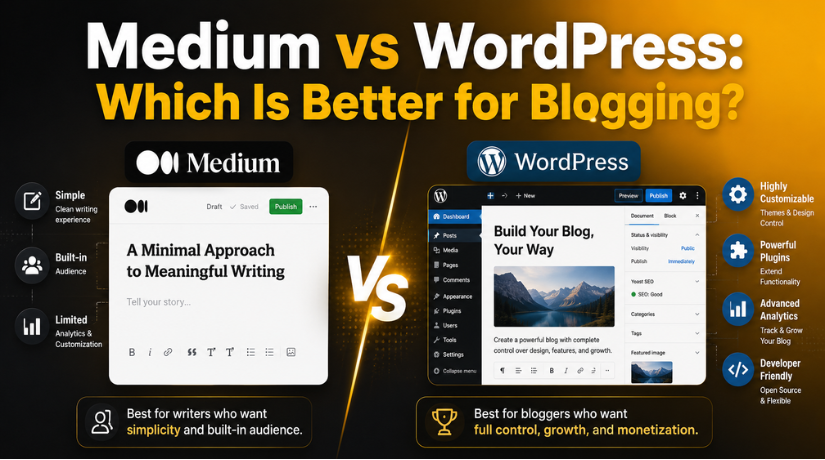
Medium vs WordPress: Which Is Better for Blogging?
Introduction
Choosing between Medium and WordPress can feel confusing for new bloggers. Both platforms help you publish content online. But they work in very different ways. One gives you speed and simplicity. The other gives you control and long-term growth.
Many beginners ask whether they should choose Medium or WordPress for blogging. The answer depends on your goal. Some writers only want a simple place to share ideas. Others want to build traffic, grow a brand, and earn trust online.
Medium is easy to start with. You can create an account and publish quickly. You do not need hosting, themes, or plugins. This makes it helpful for people who want less setup.
WordPress needs more setup in the beginning. But it gives more freedom later. You can control your design, SEO, pages, and content structure. This makes it useful for serious bloggers and business owners.
So, the best blogging platform for beginners depends on purpose. Medium is better for quick writing. WordPress is better for long-term blogging.
What Is Medium?
Medium is a hosted online publishing platform. It allows writers to create and share articles with ease. You do not need to buy hosting or install software. You also do not need to manage website design.
This makes Medium simple for beginners. A writer can sign up, write a post, and publish it. The platform already has a clean layout. It also has readers who visit Medium for stories, guides, and opinions.
Medium is often useful for:
- Personal thoughts and stories
- Opinion-based articles
- Simple educational posts
- Casual blogging
- Testing content ideas
Many users ask, “Is blogging on Medium worth it?” For simple publishing, it can be worth it. Medium helps writers focus only on content. It removes many technical tasks from the process.
However, Medium is not the same as owning a full blog. You publish within Medium’s system. Your design, branding, and growth options stay limited. This is why bloggers should compare both platforms before choosing one.
What Is WordPress?
WordPress is a powerful platform for building blogs and websites. It helps users create content with full control. Unlike Medium, WordPress gives you your own website space. You can manage design, pages, menus, categories, and blog posts.
Many bloggers choose WordPress for long-term content growth. It works well for personal blogs, business blogs, and niche websites. A blogger can publish articles, add service pages, collect leads, and build trust.
WordPress also supports many useful features through plugins. These tools can help with SEO, speed, security, forms, backups, and design. This makes WordPress more flexible than a simple writing platform.
One major advantage is search engine control. WordPress blog SEO benefits can help bloggers improve visibility. You can add custom titles, meta descriptions, headings, image alt text, and internal links. These details help search engines understand your content better.
WordPress may need more setup at first. You need a domain, hosting, theme, and basic settings. Yet this setup gives more control over your blog’s future.
Medium vs WordPress: Ease of Use
Medium is easier for beginners who only want to write. You can create an account and publish your first post quickly. There is no need to manage hosting or website design.
WordPress takes more time to set up. You need to choose hosting, install WordPress, and select a theme. You may also need plugins for SEO, security, and performance.
Still, WordPress becomes easier after the basic setup. The dashboard helps you manage posts, pages, images, and comments. You can also improve your blog as your needs grow.
So, the best blogging platform for beginners depends on intent. Medium is best for simple writing with fewer tasks. WordPress is better for beginners with serious blogging goals.
When choosing Medium or WordPress for blogging, think about growth. Medium helps you start fast. WordPress helps you build a stronger blog over time.
Medium vs WordPress SEO
SEO is one of the biggest differences between Medium and WordPress. Both platforms can help users publish content online. But they do not offer the same SEO control. This is important for bloggers who want steady search traffic.
Medium has a strong domain and a simple publishing system. Some Medium articles can rank well on Google. This can help new writers get visibility faster. However, Medium does not give full SEO control. You write inside Medium’s platform, so many settings stay limited.
Many beginners ask, “Is Medium good for SEO?” The answer is yes, but only to a certain level. Medium can support basic SEO. It gives clean pages, readable layouts, and a built-in audience. But it does not offer deep control over technical SEO.
On Medium, you may face limits with:
- Advanced SEO plugins
- Full website structure
- Custom schema setup
- Deep internal linking plans
- Complete design control
- Lead capture options
This makes Medium useful for simple publishing. But it may not be enough for long-term SEO growth. Your content also lives within Medium’s system. So, your traffic mostly supports Medium’s platform first.
WordPress gives much stronger SEO control. This is why many serious bloggers choose it. You can manage each important SEO element on your own website. You can also improve content over time as search needs change.
WordPress blog SEO benefits include many useful options. You can create custom meta titles and descriptions. You can add image alt text and internal links. You can also improve page speed, mobile layout, and content structure.


WordPress also supports SEO plugins. These tools can guide content optimization. They can help check headings, readability, links, and meta details. This helps bloggers publish cleaner and more search-friendly posts.
The Medium vs WordPress SEO comparison is clear for growth. Medium is simple and can bring some visibility. WordPress is better for building lasting organic traffic. It gives you more control, more ownership, and better structure.
For bloggers who want a real content asset, WordPress has the edge. It helps build authority around a niche. It also sends traffic directly to your own website.
Content Ownership and Control
Content ownership is a major point in this comparison. When you publish on Medium, your content appears inside Medium’s platform. You can write and share articles there. But the full publishing system does not belong to you.
Medium can change its layout, rules, features, or visibility options. These changes may affect how readers find your content. You also have limited control over navigation, calls to action, and blog structure.
This is where WordPress gives a stronger advantage. With WordPress, your blog runs on your own website. You control your content, pages, categories, menus, and design. You can also decide how readers move through your site.
Many users ask, “Is Medium better than WordPress?” For simple writing, Medium can feel easier. But for ownership and control, WordPress is usually better.
Design, Branding, and Customization
Design and branding also matter for serious blogging. Medium gives writers a clean and simple layout. This helps articles look neat without extra work. However, the design options are very limited.
Most Medium blogs look similar because the platform controls the layout. This can make it harder to build a unique brand. You cannot fully shape the reader journey either.
WordPress gives more freedom for branding. You can choose themes, colors, menus, page layouts, and blog styles. You can also add landing pages, service pages, forms, and custom sections.
When choosing Medium or WordPress for blogging, think about your brand goal. Medium helps you publish fast. WordPress helps you build a stronger online identity.
Cost and Maintenance
Cost is another important factor for bloggers. Medium has fewer setup needs. You can start writing without buying hosting or managing updates. This makes it simple for casual writers.
So, is blogging on Medium worth it? Yes, it can be worth it for basic publishing. It works well when you only want to share ideas. It also reduces technical work for beginners.
WordPress may cost more at the start. You may need a domain, hosting, theme, and useful plugins. You also need to manage updates, backups, speed, and security.
Still, this cost can support long-term growth. WordPress gives more value when your blog supports traffic, leads, or business goals. Services like 24×7 WP Support can help manage updates, security, speed, backups, and SEO tasks.
Which Platform Is Better for Different Bloggers?
The better platform depends on your blogging goal. Medium works well for writers who want fast publishing. It is simple, clean, and easy to use. You can start writing without any technical setup.
Medium is a good choice if you want to:
- Share personal thoughts
- Publish opinion-based articles
- Test simple content ideas
- Avoid website maintenance
- Start writing without hosting
Many beginners ask, “Is Medium better than WordPress?” The answer depends on purpose. Medium is easier for casual writing. But WordPress is better for serious blogging goals.
WordPress is a better choice when you want growth. It helps you build your own blog, brand, and audience. It is also stronger for search traffic and business results.
For many users, WordPress is the best blogging platform for beginners who want long-term value. It needs setup, but it gives more control later.
Conclusion
In the Medium vs WordPress SEO comparison, WordPress has a clear edge. Medium can help writers publish quickly. It may also bring some readers from its own platform. But it gives limited control over SEO, design, and growth.
WordPress blog SEO benefits are stronger for long-term blogging. You can manage titles, descriptions, links, speed, images, and structure. You also own your content and website experience.
Medium is good for simple publishing. WordPress is better for serious blogging, branding, and search growth. For bloggers who want a professional blog, WordPress is the better choice.
24×7 WP Support can help with WordPress setup, maintenance, speed, security, and SEO improvements.

Brian is a WordPress support specialist and content contributor at 24×7 WP Support. He writes practical, easy-to-follow guides on WordPress troubleshooting, WooCommerce issues, plugin and theme errors, website security, migrations, performance optimization, and integrations. With a focus on solving real website problems, Brian helps business owners, bloggers, and online store managers keep their WordPress sites running smoothly.