
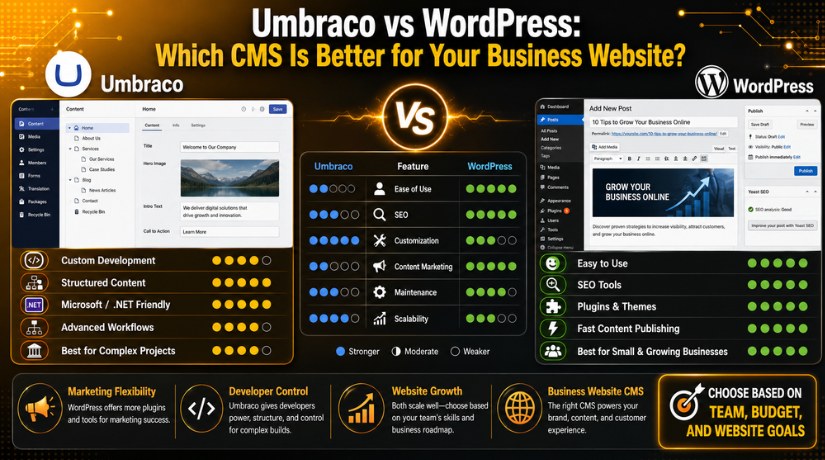
Umbraco vs WordPress: Which CMS Is Better for Your Business Website?
Introduction
Selecting the appropriate CMS is a crucial business choice. Your website’s appearance, functionality, and expansion are all managed by your CMS. It also affects your SEO, content updates, speed, security, and user experience. A weak CMS choice can slow future growth. It can also increase support costs over time.
Before creating a website, many business owners evaluate WordPress and Umbraco. The content management mechanisms on both platforms are robust. They do, however, cater to various corporate requirements. WordPress is often known for easy website management. Umbraco is known for custom development and flexible content control.
This Umbraco vs WordPress comparison helps businesses understand the main difference. It focuses on real business needs, not just technical features. A business website must be easy to update. It should also support SEO, lead generation, and long-term growth. The right CMS should match your team, budget, and website goals.
What WordPress Offers for Business Websites
One of the most widely used CMS platforms in the world is WordPress. It is used by many companies to create online stores, blogs, landing pages, and service websites. It gives business owners more control over website updates. Teams can add pages, publish blogs, upload images, and edit content easily.
One major strength of WordPress is its simple dashboard. Most users can learn the basics without advanced coding skills. It is therefore beneficial to small and medium-sized enterprises. It also supports larger websites when managed correctly.
WordPress offers many useful features for business growth, such as:
- Easy blog and page publishing
- Thousands of themes for different industries
- Plugin support for added website features
- SEO tools for better Google visibility
- WooCommerce support for online selling
- Flexible design options for marketing pages
When comparing WordPress vs Umbraco, WordPress often feels easier for daily use. Business owners can manage common tasks without waiting for developers. This saves time and keeps content fresh. Fresh content can also support better search performance.
WordPress is also useful for businesses focused on digital marketing. It supports blog posting, internal linking, SEO plugins, contact forms, and conversion tools. These features help businesses attract users and generate leads.
But WordPress still need proper maintenance. Core files, plugins, and themes all require frequent upgrades. A website also needs strong hosting, security checks, and speed optimization. With proper planning and regular care, WordPress can serve many business websites well.
What Umbraco Offers for Business Websites
The open-source CMS Umbraco is based on Microsoft.NET. It is often used for custom business websites. It gives developers strong control over website structure and features. This makes it useful for companies with specific technical needs.
Many businesses choose Umbraco when they need custom content control. It can support unique layouts, advanced workflows, and structured content. This helps when a website has many content types. It also helps when different teams manage different website areas.
In an Umbraco CMS vs WordPress discussion, Umbraco often stands out for custom development. It is not mainly built around ready-made themes or plugins. Instead, developers can create a setup based on exact business goals. This gives more freedom for complex website projects.
Umbraco can be a good choice for businesses that need:
- Custom page structures for different departments
- Advanced user roles and content permissions
- Strong control over website code and design
- Integration with Microsoft-based business systems
- A clean editing area for trained content teams
Umbraco also gives content editors a focused workspace. Developers can build the backend in a simple way. This helps teams update content without seeing extra options. However, the final editing experience depends on development quality.
The main point is simple. Umbraco works well when a business needs a custom CMS. It may not suit every small website that needs a fast launch. It usually needs skilled developers for setup and support. For that reason, businesses should plan budget and maintenance carefully.
Ease of Use: Which CMS Is Easier for Business Teams?
Ease of use matters for every business website. Teams need to update content without long delays. They may need to add blogs, edit service pages, or change images. A CMS should make these tasks simple and safe.
For day-to-day website management, WordPress is typically simpler. Its dashboard is simple for most business users. The block editor helps users create and update content. You don’t need to write code to complete many things. Because of this, marketing teams and company owners can benefit from WordPress.
A WordPress user can often handle common tasks like:
- Publishing new blog posts
- Editing service page content
- Adding images and videos
- Updating menus and basic layouts
- Managing contact forms and plugins
Umbraco can also be easy for content editing. But its ease depends on the developer setup. A well-built Umbraco website can feel clean and simple. Editors may only see the fields they need. This can reduce mistakes and keep content organized.
However, larger changes in Umbraco often need developer help. Adding new layouts, features, or templates may take more planning. This can slow updates if no developer is available.
WordPress is more manageable for the majority of small and mid-sized organizations. It offers more control to non-technical teams. Umbraco is better when a business wants a custom editing system. So, the best CMS for business website use depends on team skills, goals, and support needs.
Customization and Development Flexibility
Customization is important for every growing business website. Your CMS should support your design, features, and future plans. It should also allow safe changes as your business grows. This is where WordPress and Umbraco work in different ways.
WordPress offers fast and practical customization for business websites. It gives access to many themes, page builders, plugins, and custom code options. This helps businesses create professional websites without building every feature from zero. A company can add forms, galleries, maps, SEO tools, and booking options easily.


For many business owners, this makes WordPress a flexible choice. It supports websites that need standard business tools and features. It also helps teams improve pages without a full rebuild. Most changes can be handled through trusted plugins or expert WordPress support.
WordPress customization can help with:
- Service pages for different business offers
- Landing pages for paid campaigns
- Contact forms for lead generation
- Blog layouts for content marketing
- WooCommerce features for online selling
- SEO tools for search performance
When comparing Umbraco vs WordPress for business website needs, WordPress is often faster. It offers ready-made tools for many common website goals. This can reduce development time and lower project costs. However, speed and security may be impacted by an excessive number of plugins. So, plugin quality and maintenance are very important.
Umbraco gives a different type of flexibility. It is stronger for custom-built website systems. Developers can create content models, templates, workflows, and features based on exact needs. This is useful when a business has complex processes or unique content rules.
Umbraco can work well for companies needing custom integrations. It may suit businesses using Microsoft tools or internal systems. It also gives developers strong control over the website structure. But this freedom usually needs more planning and technical skill.
So, WordPress gives faster flexibility through ready-made solutions. Umbraco gives deeper flexibility through custom development. The right option depends on your budget, timeline, and support needs.
SEO, Content Marketing, and Website Growth
SEO is a major part of business website growth. A CMS should help your team publish useful content. It should also support clean pages, fast loading, and search-friendly structure. Both platforms can support strong SEO when planned and set up properly.
WordPress is very strong for content marketing. It makes blog publishing simple for business teams. Users can create service pages, guides, updates, and landing pages easily. This helps businesses target customer questions and search intent.
In a WordPress vs Umbraco SEO comparison, WordPress often feels easier. It offers popular SEO plugins for titles, descriptions, schema, sitemaps, and redirects. These tools help non-technical users manage important SEO tasks. They also support better content planning and page optimization.
WordPress also supports internal linking and regular publishing. These are important for long-term search growth. Businesses can create blogs around services, locations, and customer needs. This helps bring more qualified traffic from Google.
Umbraco can also support strong SEO results. It can be built with clean code, structured content, and custom fields. Developers can create SEO controls based on business goals. However, many SEO features may need custom setup first.
For most marketing-focused businesses, WordPress is easier to manage. It supports faster content publishing and ongoing SEO work. Umbraco is better when SEO needs a custom technical structure. Both can grow well with the right strategy and maintenance.
Security, Updates, and Maintenance Needs
Security should be a top priority for every business website. A CMS can only stay safe with regular care. This includes updates, backups, hosting checks, and proper user access.
In an Umbraco vs WordPress comparison, both platforms can be secure. WordPress requires routine updates for its core system, themes, and plugins. Poor plugins or weak passwords can create website risks. That is why trusted tools and expert support matter.
Umbraco also needs proper maintenance and secure hosting. Developers should review updates, code quality, and access settings. A well-managed Umbraco website can stay stable and safe. However, it still needs technical care over time.
Scalability for Business and Enterprise Websites
Scalability allows your website to grow with business needs. WordPress can support growing traffic, blogs, service pages, and stores. It performs well with strong hosting and clean optimization.
Umbraco may suit complex enterprise projects better. It works well for custom workflows and .NET-based systems. For Umbraco vs WordPress for enterprise website needs, Umbraco fits advanced technical builds.
Final Verdict: Which CMS Should Your Business Choose?
WordPress is usually a strong choice for small and growing businesses. It is easier to manage, publish, and grow. It supports SEO, content marketing, and lead generation well.
Umbraco is better for custom business systems. It suits companies with developers and complex technical needs. The right CMS choice depends on your business goals and website needs.
Conclusion
Both CMS platforms offer strong benefits for businesses. WordPress is better for easy control and marketing growth. Umbraco is better for custom technical projects. If you use WordPress,24×7 WP Support can help with setup, security, speed, and ongoing website care.
Related posts:

Brian is a WordPress support specialist and content contributor at 24×7 WP Support. He writes practical, easy-to-follow guides on WordPress troubleshooting, WooCommerce issues, plugin and theme errors, website security, migrations, performance optimization, and integrations. With a focus on solving real website problems, Brian helps business owners, bloggers, and online store managers keep their WordPress sites running smoothly.