How to Maximise Direct Hotel Bookings with WordPress UX Design
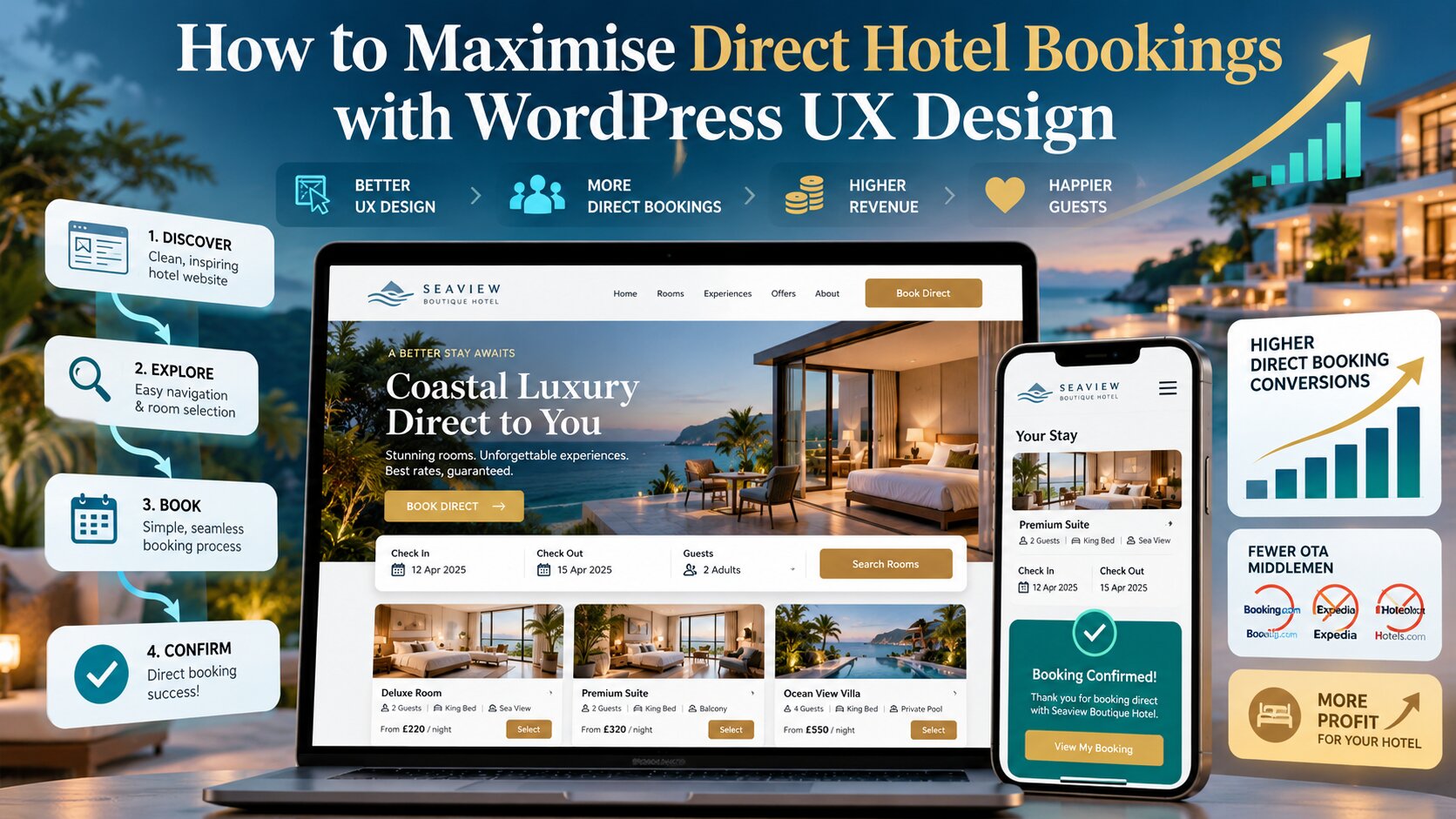
Online reservations now account for more than 70 percent of all global travel sales. For hoteliers in highly competitive markets like the Maldives, securing a direct booking is far more valuable than paying hefty commission fees to third-party platforms. In fact, a comprehensive 2025 analysis by SiteMinder shows that hotel websites generated the highest average booking value at US$516 per reservation easily outperforming the US$312 average seen on major online travel agencies. Achieving these premium direct bookings requires more than just beautiful imagery. It demands a sophisticated user experience built on a robust platform like WordPress. Guests who book directly often feel a stronger connection to the brand and expect a higher level of personalised service from the moment they land on the homepage.
The Impact of Performance on the Booking Journey
In the hospitality sector, a seamless digital experience is a non-negotiable requirement. Mobile devices now drive roughly 63 percent of all online travel bookings. However, mobile users are notoriously impatient. Over half of mobile visitors will abandon a website entirely if it takes longer than three seconds to load, instantly surrendering potential revenue to competitors. Data shows that every additional second of load time can reduce a hotel’s conversion rate by up to 4.4 percent. For instance, high-resolution images of pristine beaches and luxury suites are essential for marketing, but they must be properly compressed and delivered via a content delivery network to maintain lightning-fast speeds.
Independent properties must prioritise technical performance to match top travel agencies, which often load in under two seconds. Rather than relying on basic setups, many properties find that consulting a professional hotel website design company is the best way to ensure their underlying code and media assets are fully optimised for speed and mobile responsiveness. A professionally structured site ensures that potential guests stay engaged from the moment they land on the homepage until their payment is processed.
Choosing the Right Foundation for Scalability
WordPress remains the dominant infrastructure for website development, powering over 43 percent of all websites globally. However, how a property utilises this content management system plays a critical role in its success. Many independent hotels start with off-the-shelf templates for a quick launch. While these options are visually appealing initially, they often contain bloated code that slows down load times and limits functionality as the business expands. Relying on too many third-party plugins to patch together a functional booking system can create security vulnerabilities and cause frustrating plugin conflicts that disrupt the reservation process.
For a truly frictionless booking environment, hoteliers must eventually upgrade their digital infrastructure. Understanding the key differences between a custom WordPress theme vs template is essential for long-term growth. Custom themes offer cleaner code, faster loading speeds, and the exact flexibility needed to integrate complex booking engines without compromising the user experience. This tailored approach allows properties to build a digital presence that perfectly matches their specific operational needs, brand identity, and long-term marketing goals.


Key UX Strategies to Reduce Cart Abandonment
The travel and hospitality sector consistently suffers from one of the highest e-commerce abandonment rates, reaching between 81 and 87 percent according to recent industry benchmarks. A major cause of this high abandonment is checkout friction. Usability research reveals that the average online travel checkout form contains up to 32 required fields, which overwhelms users and causes them to leave before confirming their stay.
To reverse this trend, hoteliers must implement specific user experience improvements within their WordPress architecture:
- Enable seamless guest checkout: Approximately 26 percent of online shoppers will abandon a transaction if a website forces them to create an account. Allowing a simple guest checkout option reduces unnecessary hurdles.
- Streamline data entry: Limiting the number of required form fields during the reservation process has been shown to yield up to a 65 percent higher conversion rate specifically for mobile users.
- Offer flexible date modifications: Websites that utilise flexible design to let users easily modify their reservation dates mid-booking without restarting the process achieve up to a 170 percent higher conversion rate.
- Integrate digital wallets: Providing alternative payment methods can recover significant lost revenue, as 13 percent of shoppers abandon carts entirely due to limited payment options.
Ultimately, a high-converting digital presence requires a strategic blend of aesthetic appeal, rapid page speed, and intuitive navigation. By leveraging the full potential of custom WordPress development and focusing on removing friction from the reservation process, hoteliers can capture more direct traffic. This approach not only boosts immediate revenue but also fosters stronger direct relationships with guests before they even arrive at the property. Setting a standard of excellence online sets the tone for a flawless in-person stay.

Brian is a WordPress support specialist and content contributor at 24×7 WP Support. He writes practical, easy-to-follow guides on WordPress troubleshooting, WooCommerce issues, plugin and theme errors, website security, migrations, performance optimization, and integrations. With a focus on solving real website problems, Brian helps business owners, bloggers, and online store managers keep their WordPress sites running smoothly.