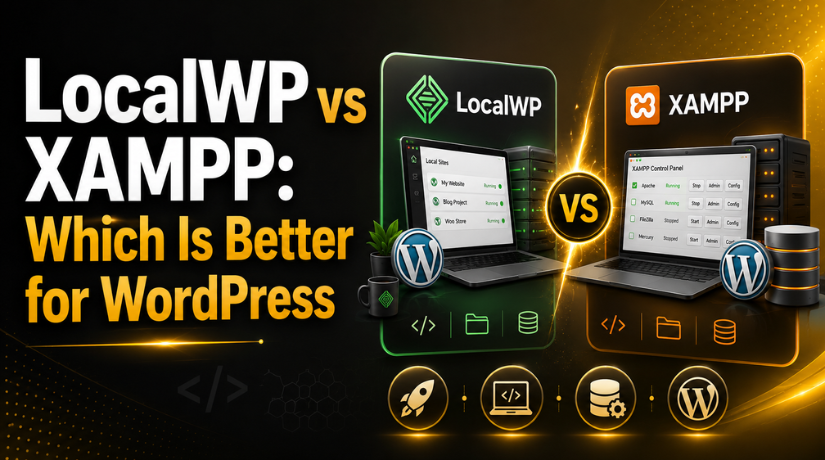
LocalWP vs XAMPP: Which Is Better for WordPress
Introduction
WordPress users often need a safe place to test changes. A live website is not the right place for experiments. One wrong plugin update can break layouts, forms, or checkout pages. A theme change can also affect the complete website design. This is why many users build a local WordPress setup first. It helps them test everything on their computer before publishing changes online.
The topic LocalWP vs XAMPP is important for WordPress users. Both tools help users create a local website environment. However, both tools work in different ways. LocalWP is made mainly for WordPress workflows. XAMPP is a general server tool for PHP-based websites. So, the best choice depends on your goal and skill level.
A good WordPress local development tool should save time and reduce risk. It should help users test plugins, themes, updates, and custom code. It should also make the setup process simple. This is very important for beginners, website owners, freelancers, and support teams.
What Is LocalWP and How Does It Help WordPress Users?
LocalWP is a local website tool made for WordPress users. It helps you create WordPress websites on your computer. You do not need to buy hosting for testing. You also do not need to touch your live website. This makes LocalWP useful for safe WordPress testing.
Many users consider LocalWP the Best local WordPress development tool for simple WordPress work. It removes many technical steps from the setup process. You can create a new WordPress site in a few clicks. You can also manage different local sites from one dashboard.
LocalWP helps WordPress users in many practical ways:
- It creates local WordPress websites quickly.
- It helps test plugins before using them live.
- It supports theme testing without website risk.
- It helps developers check updates safely.
- It makes local site management easier.
LocalWP is helpful for beginners because it feels simple. It is also useful for agencies managing many client websites. Users can test changes, fix errors, and review layouts offline. This makes the WordPress workflow safer, faster, and easier.
What Is XAMPP and How Does It Work for WordPress?
XAMPP is a local server software for your computer. It helps you run PHP-based websites without live hosting. WordPress uses PHP and a database to work properly. So, XAMPP can also run WordPress on a local system.
XAMPP includes Apache, MariaDB, PHP, and other basic tools. These tools create a server-like setup on your computer. This setup helps WordPress load like a normal website. However, the website stays private on your local machine.
XAMPP is not made only for WordPress websites. It is a general tool for many PHP projects. Developers use it for custom PHP scripts, web apps, and testing work. WordPress users can also use it, but setup takes more steps.
To install WordPress on XAMPP, you need to do several tasks. You must download WordPress and place files inside the right folder. Then you must create a database using phpMyAdmin. After that, you need to connect WordPress with that database.
This process is useful for users who like manual control. It also helps developers understand server basics better. However, beginners may find these steps slightly confusing. That is why many users compare LocalWP vs XAMPP for WordPress before choosing one.
LocalWP vs XAMPP for WordPress: Main Feature Comparison
The LocalWP vs XAMPP comparison mainly depends on user needs. Both tools can run WordPress on a local computer. However, their setup style and workflow are very different. LocalWP focuses on WordPress users. XAMPP focuses on general local server development.
Ease of Setup
LocalWP is easier for most WordPress users. You can create a local WordPress site quickly. It handles many setup steps automatically. You do not need to create a database manually. You also do not need to move WordPress files yourself.
XAMPP needs more manual setup. You must start Apache and MySQL services first. Then you must place WordPress files inside the correct folder. You also need to create a database through phpMyAdmin. This process gives control but takes more time.
WordPress Focus
LocalWP is designed around WordPress workflows. It gives users a simple dashboard for local sites. You can create, open, manage, and test sites easily. This makes it useful for bloggers, developers, and agencies.
XAMPP is not WordPress-specific. It can run WordPress, but it does not guide users. You need to understand folders, databases, and server settings. This is fine for technical users. However, it may slow down beginners.
Multiple Website Management
LocalWP makes multiple WordPress site management easier. You can manage different projects from one clean dashboard. This helps users test themes, plugins, and updates separately.
XAMPP can also manage many websites. Still, each setup needs manual folder and database handling. This can become difficult with many client websites.
Database Control
LocalWP gives easier database access for WordPress users. It keeps the process simple and direct. XAMPP uses phpMyAdmin for database work. phpMyAdmin is powerful, but it needs more care.
SSL, Local URLs, and Developer Control
LocalWP makes local URLs and SSL easier to manage. This helps users test secure website behavior locally. XAMPP may need extra steps for similar setup.
XAMPP gives more server-level control. Developers can adjust Apache, PHP, and database settings. So, XAMPP is useful for deeper technical learning.
For many users, LocalWP is a strong XAMPP alternative for WordPress. It saves time and reduces setup mistakes. XAMPP remains helpful for users who want more technical control.
Is LocalWP Better Than XAMPP for WordPress Beginners?
The common question is, is LocalWP better than XAMPP for beginners? For most WordPress beginners, the answer is yes. LocalWP is easier because it removes many manual steps. Users do not need to create databases by hand. They also do not need to move WordPress files manually. This makes the setup process faster and less confusing.


A beginner usually wants to test changes safely. They may want to test a new theme. They may also want to check plugin updates before going live. LocalWP makes these tasks simple through one clean dashboard. Users can create a WordPress site in a few clicks. They can also open the admin area quickly.
XAMPP is still useful for learning server basics. It helps users understand Apache, PHP, and database setup. However, this learning curve can slow beginners. Small mistakes can also break the local setup. For example, a wrong database name can stop WordPress installation.
LocalWP is a better choice when users want speed and comfort. XAMPP is better when users want deeper technical learning. So, the right tool depends on the user’s goal. If the goal is simple WordPress testing, LocalWP works better. If the goal is server learning, XAMPP is useful.
When Should You Use LocalWP for WordPress?
You should use LocalWP when your main work is WordPress. It is a strong WordPress local development tool for daily testing. It helps users build, test, and review websites safely. It also reduces the risk of breaking a live website.
LocalWP is useful in many WordPress situations:
- Use it when testing a new WordPress theme.
- Use it when checking plugin updates safely.
- Use it when building a website before launch.
- Use it when managing many client websites.
- Use it when fixing layout issues offline.
- Use it when reviewing custom code changes.
Many users see LocalWP as the best local WordPress development tool for simple workflows. It keeps everything focused on WordPress. This saves time for website owners, freelancers, and agencies. It also helps support teams test fixes before applying them live.
LocalWP is also a helpful XAMPP alternative for WordPress users. It gives a smoother setup and fewer manual steps. This makes it ideal for beginners and busy WordPress professionals.
When Should You Use XAMPP for WordPress?
XAMPP is useful when you want more server control. It is not only made for WordPress websites. It works well for PHP, MySQL, and custom development projects. This makes it helpful for users who want deeper technical learning.
You should use XAMPP when you want to understand server basics. It helps you learn how Apache, PHP, and databases work together. This knowledge can help when fixing hosting issues later. It also helps developers understand how WordPress runs behind the scenes.
XAMPP is also useful when you work on different PHP projects. You may build custom scripts, small web apps, or test database features. In these cases, XAMPP gives more flexibility than WordPress-only tools.
You can choose XAMPP when:
- You want to learn Apache and PHP settings.
- You need manual database control through phpMyAdmin.
- You work on non-WordPress PHP projects.
- You want to test custom local server settings.
- You are comfortable solving setup errors yourself.
In the LocalWP vs XAMPP for WordPress comparison, XAMPP fits technical users better. It gives freedom, but it also needs more care.
Quick Pros and Cons of LocalWP and XAMPP
A clear LocalWP vs XAMPP comparison helps users choose faster. Both tools are useful, but they serve different users. LocalWP is easier for WordPress tasks. XAMPP is better for deeper server learning.
LocalWP Pros
- LocalWP creates WordPress sites quickly.
- It has a clean and simple dashboard.
- It is easier for beginners and site owners.
- It helps test themes, plugins, and updates safely.
- It manages multiple WordPress sites with less effort.
LocalWP Cons
- It mainly focuses on WordPress websites.
- It is less useful for custom PHP projects.
- It may feel limited for server-level practice.
XAMPP Pros
- XAMPP gives more control over local server settings.
- It supports WordPress and other PHP projects.
- It helps users learn Apache, PHP, and databases.
- It gives direct access through phpMyAdmin.
XAMPP Cons
- XAMPP needs more manual setup for WordPress.
- Beginners may find the process confusing.
- Database mistakes can cause installation problems.
- SSL and local URL setup may need extra work.
Overall, LocalWP is easier for WordPress-focused users. XAMPP is better for users who want technical control.
Which Tool Is Better for WordPress?
The final choice depends on your WordPress workflow and skill level. For most WordPress users, LocalWP is the better option. It is faster, simpler, and built for WordPress tasks. You can create a local website quickly. You can also test themes, plugins, and updates safely.
In the LocalWP vs XAMPP comparison, LocalWP wins for ease of use. It gives a clean dashboard and simple site controls. Beginners do not need to manage server files manually. They also do not need to create databases by hand. This makes LocalWP a smoother WordPress local development tool for daily testing.
XAMPP is still useful for technical users. It gives more control over Apache, PHP, and databases. Developers can use it for WordPress and other PHP projects. It is also helpful for learning server basics. However, it needs more setup knowledge and manual work.
So, the answer is clear. LocalWP is better for WordPress-focused users. XAMPP is better for users who need server-level control. If your main goal is WordPress testing, LocalWP is the best local WordPress development tool for most users.
Conclusion
The LocalWP vs XAMPP for WordPress decision is not difficult. LocalWP is best for users who want speed and comfort. XAMPP is best for users who want technical learning. Both tools can help you build and test locally. But LocalWP gives a better WordPress-focused experience.
Choose LocalWP when you want fewer setup problems. Choose XAMPP when you want deeper server control. The right tool should match your comfort level.
If you need help with local WordPress setup, testing, migration, or errors, 24×7 WP Support can guide you. The team can help you test changes safely before making them live.

Brian is a WordPress support specialist and content contributor at 24×7 WP Support. He writes practical, easy-to-follow guides on WordPress troubleshooting, WooCommerce issues, plugin and theme errors, website security, migrations, performance optimization, and integrations. With a focus on solving real website problems, Brian helps business owners, bloggers, and online store managers keep their WordPress sites running smoothly.