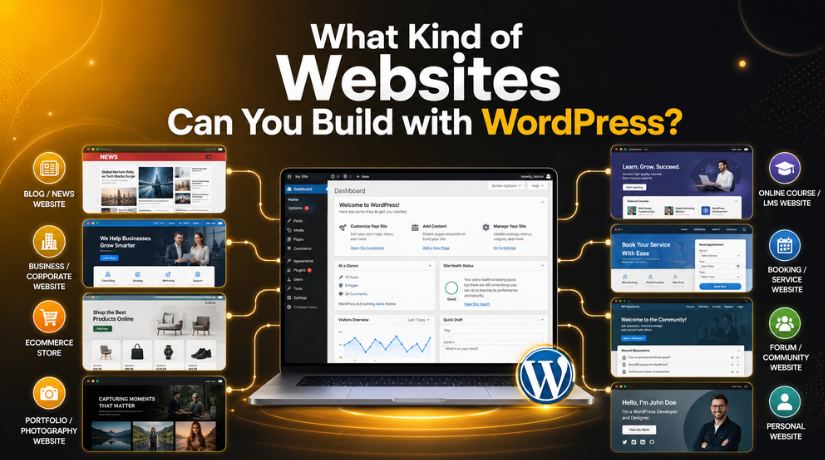
What Kind of Websites Can You Build with WordPress?
Introduction
When most people first hear about WordPress, they picture a basic blogging tool. And while WordPress did start its life as a blogging platform back in 2003, calling it just a blog tool in 2026 is like calling a smartphone just a telephone. The truth is, WordPress has grown into the most versatile content management system on the planet, powering everything from personal journals to global enterprise applications.
Today, WordPress runs over 43% of all websites on the internet. That’s not a coincidence — it’s a reflection of just how adaptable and capable the platform has become. Whether you’re a freelancer building your first portfolio, a startup launching an online store, or a large organization managing a complex digital presence, WordPress has the tools, themes, and plugins to make it happen.
In this guide, we’ll walk you through the many types of websites you can build with WordPress in 2026 — and help you figure out which one makes the most sense for your goals. If you’re still exploring whether WordPress is the right fit for you, our guide on what WordPress is and how it works is a great place to start.
Why WordPress Powers More Than Just Blogs
WordPress’s secret weapon is its plugin ecosystem. With over 60,000 free and premium plugins available, you can layer almost any functionality onto a basic WordPress install. Want to run an online store? Add WooCommerce. Need a membership portal? Install MemberPress. Building a job board? Drop in WP Job Manager. The platform doesn’t lock you into one use case — it expands with your vision.
On top of plugins, there are thousands of themes (both free and commercial) that give websites their look and feel without requiring a single line of custom code. Combine that with page builders like Elementor and Divi, and virtually anyone can design a professional, functional website without developer skills.
WordPress also plays nicely with the wider web. It integrates with payment processors, CRMs, email marketing tools, analytics platforms, social media, and much more. That ecosystem of integrations is another reason so many different types of websites choose WordPress as their foundation.
The Core Website Types WordPress Handles Brilliantly
Business Websites
A business website is often the most important digital asset a company owns — it’s the first impression for potential customers and the anchor for all marketing efforts. WordPress makes it straightforward to build a polished, professional business site that showcases your services, highlights client testimonials, and drives leads through contact forms or booking systems.
Small local businesses and large enterprises alike use WordPress for their main websites. The platform scales cleanly, so whether you start with five pages or need to grow to five hundred, WordPress handles it without a complete rebuild.
eCommerce Stores
Thanks to WooCommerce — a free plugin that transforms any WordPress site into a full-featured online store — WordPress is one of the top eCommerce platforms in the world. You can sell physical products, digital downloads, subscriptions, or services. WooCommerce supports inventory management, shipping calculations, multiple payment gateways (including Stripe and PayPal), and detailed sales reporting.
Beyond WooCommerce, plugins like Easy Digital Downloads make selling digital goods even simpler. If you’re curious about what it actually costs to build a store, our breakdown of how much it costs to build a WordPress website covers pricing in detail.
Portfolio Websites
Photographers, designers, illustrators, developers, architects, and writers all turn to WordPress for portfolio sites. The platform’s gallery and media management features let you upload and organize visual work beautifully. Dozens of portfolio-specific themes make it easy to present your projects in a clean, modern layout without any design background required.
The ability to update your portfolio in minutes — adding new projects, case studies, or client work — keeps your site current and fresh, which matters when potential clients are evaluating your recent output.
Personal Blogs and Content Sites
This is where WordPress got its start, and it’s still one of the best blogging platforms available. The built-in editor, category and tag system, RSS feeds, comment management, and SEO-friendly URL structure make it a natural home for writers, journalists, and content creators. Whether you’re documenting a travel journey, publishing thought leadership, or running a recipe blog, WordPress gives you everything you need right out of the box.
Community and Membership-Based Websites
Membership Sites
If you have knowledge, content, or a community worth paying for, WordPress membership sites let you monetize it elegantly. Plugins like MemberPress and Restrict Content Pro allow you to create multiple membership tiers, restrict access to premium content, and manage subscriptions automatically. Coaches, consultants, newsletter creators, and niche communities use this model to build sustainable recurring revenue.
Online Learning and eLearning Platforms
The demand for online education has grown massively, and WordPress is a popular backbone for learning management systems. Plugins like LearnDash, Tutor LMS, and LifterLMS transform your WordPress site into a full course platform — complete with structured lessons, video hosting, quizzes, student progress tracking, and even certificate generation. Whether you’re selling a single course or running an entire online school, WordPress can support it.
Forums and Community Platforms
Building a space where people can connect, discuss topics, and support one another is entirely achievable with WordPress. BuddyPress enables social network-style features (user profiles, activity streams, private messaging), while bbPress adds discussion forums. Many hobby groups, professional networks, and customer communities use this combination to create engaging, low-cost alternatives to commercial community platforms.
Niche Website Types That Thrive on WordPress
Directory and Listing Websites
Local business directories, restaurant guides, lawyer finders, property listings, and service marketplaces are all viable WordPress projects. Plugins like GeoDirectory and Business Directory Plugin give you the listing management, search filters, map integrations, and submission tools to run a directory with minimal custom development. You can even monetize through paid or featured listings.

Job Board Websites
Niche job boards are an excellent business model, and WordPress makes them accessible to build. WP Job Manager is one of the most popular plugins for this use case, allowing employers to post listings and job seekers to browse and apply — all within a clean, searchable interface on your site.
Event Websites
Conferences, workshops, music events, and community gatherings all benefit from a dedicated event website. The Events Calendar plugin (one of the most downloaded in the ecosystem) handles event scheduling, registration, ticket sales, and calendar views. Add a plugin like WooCommerce Tickets, and you have an end-to-end ticketing solution without paying hefty platform fees to third-party services.
Review and Comparison Sites
Affiliate marketers and product reviewers often build comparison sites on WordPress because the platform is inherently SEO-friendly and easy to update. Plugins like WP Review Pro add structured star ratings and review schemas that can trigger rich snippets in Google results — a real competitive advantage for driving organic traffic.
News, Media, and Publishing Websites
WordPress was built for publishing, and it shows. Major news organizations around the world — including TIME magazine and The New York Observer — run on WordPress. The platform’s multi-author support, editorial workflow tools, scheduled publishing, category/tag architecture, and native RSS feed functionality make it ideal for sites that publish content at high volume and high frequency.
Media sites often combine news content with video embeds, podcasts, newsletters, and social integration — all of which WordPress handles through its plugin ecosystem. Magazine-style themes provide the sophisticated layouts that media brands demand, with homepage hero sections, featured article grids, and category hubs.
Nonprofit, Government, and Educational Websites
Organizations with strict accessibility and compliance requirements still choose WordPress regularly. Government agencies appreciate its security track record, active development community, and support for accessibility standards (WCAG). Educational institutions use it for everything from school homepages to student portals. Even the White House website has run on WordPress, which speaks to the platform’s reliability under demanding conditions.
Nonprofits benefit from purpose-built donation plugins like GiveWP and Charitable that allow them to accept gifts, run fundraising campaigns, and display impact metrics — all without expensive custom development. Since many nonprofits operate on tight budgets, the fact that WordPress itself is free to use makes it an especially attractive foundation.
Advanced Website Types: Headless WordPress in 2026
One of the most exciting developments in the WordPress ecosystem is the rise of headless architecture. In a headless WordPress setup, the CMS handles content management on the backend while a separate frontend framework (like React, Next.js, or Vue) delivers the actual user experience. This gives developers maximum control over performance, design, and functionality while editorial teams continue using the familiar WordPress dashboard they know.
Large eCommerce brands, media companies, and enterprise organizations are increasingly choosing headless WordPress in 2026 because it delivers blazing-fast, app-like experiences while retaining the content management flexibility WordPress is known for. If your project demands sub-second page loads, advanced interactivity, or multi-channel content delivery, headless is worth exploring.
How to Choose the Right Website Type for Your Goals
With so many options available, the decision about what kind of WordPress website to build should start with a few honest questions. What is the primary goal of this site — to generate leads, sell products, build a community, or share information? Who is the audience, and what do they need to do when they arrive? What’s the budget for both the initial build and ongoing maintenance?
It also helps to think about content. Sites that rely on frequent publishing (blogs, news, eLearning) need robust editorial tools and easy content workflows. Sites focused on transactions (eCommerce, memberships, events) need strong payment processing and user account management. Sites built around community need engagement features and moderation tools.
Don’t overcomplicate your first version. WordPress’s real strength is that you can start with a focused, well-executed core site and expand it over time. Add an eCommerce component after the basic business site is established. Layer in a membership section once you’ve built an audience. The platform grows with you — you don’t need to build everything at once.
Ready to Build Your WordPress Website?
Whether you’re envisioning a polished business website, a thriving online store, a community membership platform, or something more specialized, WordPress gives you the tools to bring it to life in 2026. The combination of flexibility, an active global community, and thousands of plugins and themes means there’s very little you can’t build on this platform.
That said, knowing what you can build and actually building it well are two different things. Technical decisions around hosting, theme selection, plugin conflicts, performance optimization, and security all have real consequences for how your site performs and how much it costs to maintain. If you’d rather get it right the first time without navigating those decisions alone, the team at 24×7 WP Support is here to help. We specialize in WordPress websites of all types — from initial setup and design to ongoing management and support. Get in touch today and let’s build something worth visiting.

Brian is a WordPress support specialist and content contributor at 24×7 WP Support. He writes practical, easy-to-follow guides on WordPress troubleshooting, WooCommerce issues, plugin and theme errors, website security, migrations, performance optimization, and integrations. With a focus on solving real website problems, Brian helps business owners, bloggers, and online store managers keep their WordPress sites running smoothly.